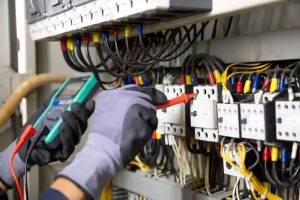
Restaurant kitchens present unique electrical challenges that require specialist knowledge and careful planning. As demanding environments where high-powered equipment operates alongside water, steam, and extreme temperatures, these spaces need robust electrical systems designed by experienced commercial electricians to ensure both safety and operational efficiency.
Understanding Kitchen Electrical Demands
Commercial kitchens consume enormous amounts of electrical power, with a single commercial oven drawing 20-30 amps whilst complete kitchen setups can require 400-600 amps total capacity. This substantial electrical load demands meticulous planning from qualified electrical contractors who understand the specific requirements of food service environments.
The combination of moisture, grease, and temperature fluctuations creates conditions that standard electrical installations cannot withstand. Kitchen electricals must be rated for these harsh conditions, requiring specialised equipment and installation techniques that only experienced electricians should undertake.
Critical Safety Requirements

All electrical equipment in commercial kitchens must meet appropriate Ingress Protection (IP) ratings as specified in BS EN 60529. Areas exposed to water splashing require IP65-rated equipment, whilst steam-prone zones need even higher protection levels. Light fittings, switches, and sockets must be specifically designed for kitchen environments and certified to relevant British Standards.
Residual Current Breaker with Overcurrent protection (RCBO) devices are essential for every kitchen circuit, providing both earth fault protection and overcurrent protection. These safety devices offer crucial protection in environments where electrical faults could prove catastrophic.
Emergency shutdown systems allow kitchen staff to quickly cut power to all cooking equipment during fires or other emergencies. These systems should be easily accessible and clearly marked, with manual override switches positioned near exit points for immediate access during crisis situations.
Power Distribution Excellence
Each major piece of equipment requires its own dedicated circuit. Commercial ovens, fryers, and dishwashers generate significant electrical loads and heat, making shared circuits both inefficient and potentially dangerous. This approach also simplifies maintenance and troubleshooting procedures.
Most commercial kitchen equipment operates on three-phase power systems for optimal efficiency. Three-phase systems deliver more consistent power whilst allowing smaller cable sizes compared to single-phase equivalents. This proves particularly important for motors in ventilation systems and large cooking equipment.
Proper load balancing across phases prevents voltage fluctuations that can damage sensitive equipment like programmable ovens and refrigeration systems. Unbalanced loads increase energy costs and cause premature equipment failure, making professional electrical design essential.
Ventilation and Fire Safety Integration

Kitchen electricals supporting ventilation systems are critical for safety and comfort. Extraction fans must be interlocked with cooking equipment to ensure operation whenever heat-producing appliances are active. Variable speed drives can improve energy efficiency whilst maintaining adequate extraction rates.
Fire suppression systems require dedicated electrical supplies with battery backup to ensure operation during power outages. These systems must integrate with main electrical distribution to automatically shut down gas supplies and activate extraction fans during fire events.
Energy Efficiency Strategies
Modern LED lighting designed for commercial kitchens can reduce lighting energy consumption by up to 80%. These fixtures offer excellent colour rendering for food preparation whilst generating minimal heat, reducing air conditioning loads.
Smart electrical panels with energy monitoring capabilities allow restaurant managers to track power consumption in real-time. This data helps identify inefficient equipment and optimise operating schedules to reduce energy costs significantly.
Power factor correction equipment can reduce energy costs by 10-15% whilst improving overall electrical system efficiency. Many commercial kitchen appliances have poor power factors, making this investment particularly valuable for restaurant operations.
Compliance and Maintenance
All restaurant electrical installations must comply with BS 7671 (18th Edition Wiring Regulations) and specific requirements for commercial food preparation areas. Regular electrical inspections are legally required for commercial premises under the Electricity at Work Regulations 1989, not merely good practice.
Local authorities and building control departments may have additional requirements for commercial kitchen electrical systems, particularly regarding fire safety and emergency procedures. Building regulations approval is typically required for significant electrical work in commercial kitchens, with applications submitted to the relevant local authority.
Portable appliance testing (PAT) proves crucial in commercial kitchens where equipment faces harsh conditions, as required under the Electricity at Work Regulations 1989. High-use items like mixers, blenders, and small cooking appliances should be tested more frequently than standard commercial equipment, with many operators conducting quarterly testing for critical kitchen equipment.
Establishing regular maintenance schedules for electrical systems prevents costly breakdowns during peak service periods. This includes cleaning electrical panels, checking connections, and testing safety devices like RCBOs and emergency shutdown systems.
Future-Proofing Your Investment
When designing restaurant kitchen electrical systems, consider future expansion and menu changes. Installing spare capacity in electrical panels and conduit systems makes adding equipment easier without major rewiring projects.
The move towards sustainable cooking methods, including induction cooking and energy-efficient equipment, requires careful electrical planning. Induction cooking systems, whilst more efficient, may require upgraded electrical supplies and different safety considerations.
Professional Expertise Essential
Restaurant kitchen electrical systems require specialised knowledge and careful planning to ensure safety, efficiency, and compliance. The harsh operating environment, high power demands, and critical safety requirements make professional electrical design and installation essential for success.
Working with experienced commercial electricians ensures your electrical systems support business operations whilst meeting all safety and regulatory requirements. Only electricians registered with competent person schemes such as NICEIC, NAPIT, or ELECSA should undertake commercial kitchen electrical work. The investment in proper electrical infrastructure delivers reduced energy costs, improved safety, and reliable equipment operation that supports your restaurant’s success from day one.
Contact us today for a consultation and quote. Let our experienced electricians help you create a safe, efficient, and future-proof electrical system that supports your restaurant’s success.