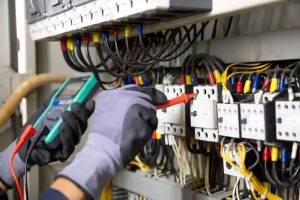
In commercial premises in England, any electrical work that involves installing a new circuit, replacing a consumer unit, or making additions to existing circuits in high-risk areas must be carried out by a qualified electrician who can issue the required certification. While commercial electrical work is not subject to the same Building Regulations notification requirements as domestic properties under Part P, all work must still comply with BS 7671 (the UK Wiring Regulations) and be properly tested, inspected, and certified by a competent person.
Does Part P Apply to Commercial Electrical Work?
Part P of the Building Regulations applies specifically to domestic dwellings in England and Wales, not to commercial properties. This means that the formal notification process required for certain domestic electrical jobs does not apply to offices, shops, factories, warehouses, or other commercial premises.
However, this does not mean commercial electrical work can be carried out without proper qualifications or certification. All electrical installations in commercial properties must meet the requirements of BS 7671, and the Electricity at Work Regulations 1989 place a legal duty on employers and building owners to ensure that electrical systems are safe and properly maintained.
What Electrical Work in Commercial Premises Requires Certification?
Although commercial work is not bound by Part P notification rules, UK law requires that all electrical installation work in commercial settings be carried out to BS 7671 standards and properly certified. The types of work that must be signed off by a qualified electrician include the following.
Installation of New Circuits
Any new electrical circuit installed in a commercial building requires certification. This includes lighting circuits, power circuits for machinery, dedicated circuits for commercial kitchens, server rooms, or air conditioning systems. A qualified electrician must design, install, test, and issue an Electrical Installation Certificate for the work.
Consumer Unit Replacement or Upgrades
Replacing or upgrading a commercial consumer unit (distribution board) is notifiable work that requires proper certification. Consumer units control the electrical distribution throughout a building, and any work involving them must be carried out by someone competent to verify the installation meets current standards.
Alterations to Existing Circuits
Extending or modifying existing circuits in a commercial property requires certification if the work changes the protective devices, introduces new cable routes, or affects the safety characteristics of the installation. Minor additions such as replacing a like-for-like socket or light fitting on an existing circuit may not require a full certificate, but good practice dictates that a Minor Electrical Installation Works Certificate should still be issued.
Electrical Work in High-Risk Areas
Electrical installations in areas where there is increased risk, such as commercial kitchens, bathrooms, wet rooms, swimming pools, saunas, or areas with flammable materials, require particularly careful attention. Any new circuits or alterations to existing ones in these environments must be carried out by a qualified electrician and fully certified.
Three-Phase Electrical Installations
Many commercial and industrial premises operate on three-phase electricity supplies to power machinery, HVAC systems, lifts, or other heavy-duty equipment. Work on three-phase systems requires specialist knowledge and must be carried out by an electrician with the appropriate qualifications and experience.
Fire Alarm and Emergency Lighting Systems
Installing or altering fire alarm systems and emergency lighting in commercial buildings is governed by specific British Standards and fire safety legislation. These systems are life-critical and must be installed, tested, and certified by electricians who understand the relevant compliance requirements.
What Qualifications Should a Commercial Electrician Have?
When hiring an electrician for commercial work in Norfolk or Norwich, you should look for someone who holds recognised industry qualifications and is registered with an accredited body. The key qualifications and registrations to check include the following.
NVQ Level 3 in Electrical Installation
This is the standard qualification for a fully trained electrician in the UK. It demonstrates competence in designing, installing, and testing electrical systems to BS 7671 standards. An electrician with an NVQ Level 3 should be able to handle the majority of commercial electrical work.
BS 7671 18th Edition Wiring Regulations Qualification
All electricians working in the UK should hold a qualification in the current edition of BS 7671, which sets out the requirements for electrical installations. The 18th Edition, as amended, is the current standard that all work must comply with.
Inspection and Testing Certification
Electricians carrying out inspection, testing, and certification work need to hold qualifications such as the City & Guilds 2391 or equivalent. This enables them to issue Electrical Installation Certificates and carry out periodic inspections of existing installations.
NICEIC or NAPIT Registration
While not a legal requirement for commercial work in the same way as domestic installations, registration with a competent person scheme such as NICEIC or NAPIT provides independent verification that the electrician has been assessed for technical competence and adherence to industry standards. NICEIC approved contractors are regularly audited to ensure their work meets BS 7671 and other relevant regulations.
What Certification Should I Receive After Commercial Electrical Work?

Once electrical work is completed in your commercial premises, you should receive appropriate certification depending on the scope of the work. The correct documentation is not just good practice but is often required by insurance companies, health and safety inspectors, and when selling or leasing commercial property.
Electrical Installation Certificate (EIC)
An Electrical Installation Certificate is required for new installations or significant alterations such as new circuits, consumer unit replacements, or complete rewires. The certificate confirms that the design, construction, inspection, and testing of the installation meet BS 7671 requirements. It should be accompanied by schedules of inspection and test results.
Minor Electrical Installation Works Certificate (MEIWC)
For smaller additions or alterations to an existing circuit, such as adding a socket or light fitting, a Minor Electrical Installation Works Certificate may be issued instead of a full EIC. This still confirms that the work has been tested and complies with BS 7671.
Electrical Installation Condition Report (EICR)
An EICR is issued following a periodic inspection and test of an existing electrical installation. It assesses the condition of the installation, identifies any defects or non-compliances, and categorises them according to risk. Commercial properties should have an EICR carried out every three to five years depending on the type of premises and use.
You can read more about EICR requirements for commercial premises in our Commercial EICR guide.
What Are the Legal Requirements for Commercial Electrical Work?
Commercial property owners and employers have legal obligations under several pieces of UK legislation that relate to electrical safety. Understanding these helps clarify why certification is so important.
The Electricity at Work Regulations 1989
These regulations place a legal duty on employers and those in control of business premises to ensure that electrical systems are safe and properly maintained. Regulation 4 requires that all electrical equipment and systems are constructed, maintained, and used in a way that prevents danger. Failure to comply can result in prosecution by the Health and Safety Executive.
BS 7671 Requirements for Electrical Installations
While BS 7671 is not itself a statutory document, it is widely recognised as the standard for electrical safety in the UK. Courts and enforcement bodies treat compliance with BS 7671 as evidence that the Electricity at Work Regulations have been met. Non-compliance with BS 7671 can therefore be used as evidence of a breach of statutory duty.
The Regulatory Reform (Fire Safety) Order 2005
This Order requires that fire detection and alarm systems, emergency lighting, and other fire safety electrical installations in commercial premises are properly maintained and tested. Electrical work on these systems must be carried out by competent persons and properly documented.
Can I Carry Out Any Commercial Electrical Work Myself?
Unless you are a qualified electrician with the appropriate training and certification, you should not attempt to carry out electrical work in a commercial premises. The risks are significantly higher than in domestic settings due to the greater electrical loads, three-phase supplies, and the potential for harm to employees, customers, and the public.
Even basic tasks such as replacing light fittings or adding sockets should ideally be carried out by a qualified person who can verify that the existing installation is safe and that the new work is correctly installed and tested. Commercial landlords and business owners can be held liable for accidents or fires caused by faulty electrical work, and insurance policies often require that work is carried out by competent contractors.
Why Choose a NICEIC Approved Contractor for Commercial Work in Norfolk?
Choosing a NICEIC approved contractor for your commercial electrical work in Norfolk provides several benefits beyond basic compliance. NICEIC contractors are assessed for technical competence, regularly audited, and are required to maintain professional indemnity insurance and public liability cover.
Excel Electrical Services is a fully approved NICEIC contractor with over 20 years of experience carrying out commercial electrical installations across Norfolk and North Suffolk. Our team can handle everything from routine PAT testing and EICR inspections through to complete electrical fit-outs for new commercial premises.
Read more about our NICEIC accreditation and what it means for our clients on our NICEIC page.
Frequently Asked Questions
Do I need to notify Building Control for commercial electrical work?
No. Part P notification requirements apply only to domestic dwellings in England and Wales. Commercial electrical work does not require Building Control notification, but it must still comply with BS 7671 and be properly certified by a qualified electrician.
How often should commercial premises have an electrical inspection?
Most commercial properties should have a periodic inspection (EICR) carried out every three to five years. High-risk environments such as industrial premises or buildings with heavy electrical loads may require more frequent inspections. Your electrician or insurance company can advise on the appropriate interval for your premises.
Can I use a domestic electrician for commercial work?
Not all electricians who are qualified to work on domestic properties have the experience or knowledge required for commercial installations. Commercial work often involves three-phase supplies, higher current loads, and different regulatory requirements. You should choose an electrician who has demonstrable experience with commercial projects and appropriate qualifications.
What happens if electrical work is not certified?
Electrical work that is not properly certified can cause problems when selling or leasing a commercial property, with insurance claims, during health and safety inspections, and in the event of an accident or fire. Uncertified work may need to be inspected and tested retrospectively, or in some cases removed and reinstalled by a qualified contractor.
Get Expert Commercial Electrical Services in NorfolkExcel Electrical Services provides fully certified commercial electrical work across Norfolk and Norwich. Contact us today to discuss your project or call 01508 488007.